

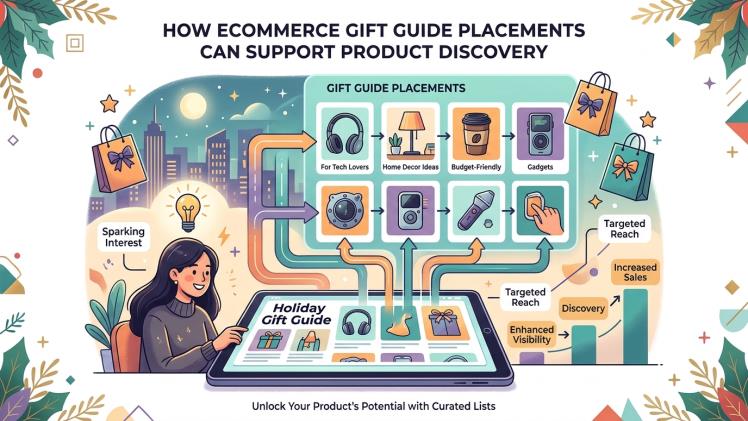
For online retailers, ecommerce gift guide placements can put products in front of shoppers at the moment they are looking for ideas. A well-chosen guide may also earn a link to a product or category page, giving readers a useful route to the item and helping search engines discover the page. The value depends on relevance and quality, not simply on collecting as many links as possible.
Gift guides appear in many forms: seasonal roundups, recommendations for specific interests, budget-based lists and editorial selections for different occasions. Retailers can approach these opportunities as part of a broader content and search strategy. The principles behind building backlinks to ecommerce pages can help teams decide which placements are worth pursuing and how to make the linked page useful once a visitor arrives.
Choose guides that fit the product
A placement is most credible when the publication’s audience and the product naturally align. A kitchen tool may suit a guide for home cooks, while a travel accessory could belong in a roundup for frequent travellers. A broad list with little connection to the item may bring limited qualified traffic, even if it has a large readership.
Before contacting an editor, review the site’s recent guides. Look at the topics it covers, how products are selected, whether links are included and how often articles are updated. This research helps you identify a specific editorial fit rather than sending the same generic pitch to every publication.
Make the pitch useful to an editor
Editors need concise information they can assess quickly. Introduce the product, explain who it is for, and point out a feature that genuinely distinguishes it. Include accurate pricing, availability and product details where relevant. If a guide is tied to a season or holiday, send your pitch early enough for the publication’s planning schedule.
Avoid presenting ordinary features as extraordinary claims. Editors may check product details, and readers expect recommendations to be accurate. A clear, factual pitch is more useful than inflated language or a long list of marketing slogans. If the product is not a match for a particular guide, respect the decision and look for a more suitable opportunity.
Link to a page that answers the reader’s next question
When a guide attracts a reader, the linked page should make it easy to understand the product and decide whether it fits their needs. Include clear descriptions, useful images, current pricing, stock information and delivery details. For category pages, organise the choices in a way that helps shoppers compare products instead of leaving them to search through an undifferentiated list.
Think carefully about which page an editor should link to. A specific product page is appropriate when the article recommends one item. A category page may make more sense when the guide discusses a range of options. The destination should match the wording and promise of the placement; sending every mention to the homepage creates an unnecessary extra step.
Assess quality beyond link counts
Track placements by publication, article topic, linked page and date. Referral visits and engagement can show whether the guide is reaching relevant shoppers. Search performance may take longer to assess, and a single link should not be treated as a guaranteed ranking improvement. Look for a pattern across relevant editorial coverage rather than judging the campaign by one metric.
Editorial links should be earned through a genuine fit and useful information. Do not rely on hidden arrangements or irrelevant placements that could undermine reader trust. Keep product pages accurate after publication, too: if availability or details change, update the page so visitors do not arrive at outdated information.
Plan the work realistically
Finding suitable publications, preparing pitches and keeping product information current takes time. Smaller retailers may handle this work internally, while others consider outsourced digital marketing for specialised support. The right arrangement depends on the team’s skills, workload and budget; clear responsibilities and approval processes matter whichever route is chosen.
For those exploring freelance help, Osdire explains how freelance digital marketing works, including common service types and the roles involved. As a marketplace with more than 900 categories, Osdire connects buyers with freelancers across areas such as marketing, writing and design. Its flat pricing and payment process—where funds are held while an order is underway and released after approved delivery—are details a buyer can review when deciding whether to hire support.
Build a repeatable approach
Strong gift guide outreach starts with a relevant product, a carefully selected publication and a landing page that serves the reader. Keep a record of pitches and results, refine the list of publications over time, and plan around the editorial calendar rather than sending rushed requests at the last minute. With that discipline, placements can contribute to both product discovery and a more useful shopping experience.